Physical Address
304 North Cardinal St.
Dorchester Center, MA 02124
Physical Address
304 North Cardinal St.
Dorchester Center, MA 02124
Whoa!
Okay, so check this out—I’ve been poking around Solana explorers for years, and some things never stop surprising me.
My first impression was simple: speed matters, but clarity matters more when you’re tracking dozens of tokens across wallets and marketplaces.
At first I thought every explorer felt the same, but then I noticed differences that matter for real-world trades and audits.
On one hand the raw RPC speed gives you instant feeds, though actually the deeper UX choices are the parts that keep me using a tool day in, day out.
Seriously?
Yes — the way an explorer surfaces holder distribution, token metadata, and NFT transfer history changes decision-making in subtle ways.
For instance, seeing a wallet that holds many fractionalized assets alongside fresh mints can be a yellow flag for market manipulation or a sign of smart-market making strategies; you learn to read those signs.
Initially I thought token trackers were just lists and numbers, but then I realized the patterns you can spot with good filters and exportable data.
Something felt off about older tools that buried contract logs behind menus, and that lack of transparency bugs me—big time—because audits should be straightforward, not somethin’ you treasure-hunt for.
Hmm…
Let me be blunt: when you’re managing NFTs and tokens on Solana you want three things—accuracy, context, and speed.
Accuracy is about getting transaction details exactly right; context is about seeing who sent what, when, and why; speed is about not missing an arbitrage window because a page took too long to load.
Actually, wait—let me rephrase that: speed without context is just noise, and context without speed is frustrating when markets move fast.
My instinct said that a balance between those three is rare, and over time my testing confirmed it: good explorers blend them thoughtfully and offer useful tools like token trackers, NFT history pages, and holder analytics.
Whoa!
Here are the features I reach for first, every single time.
A clear token tracker that shows mint addresses, supply changes, recent transfers, and verified metadata saves hours when you’re doing due diligence on a new project.
Meanwhile an NFT tracker that presents floor price movements, sales history, and provenance at a glance can be the difference between buying a piece at market or overpaying during a frenzy.
When I compare explorers side-by-side, I keep coming back to the one that balances depth with readability, and that daily habit is what nudged me toward a particular go-to platform.
Really?
Yep — and here’s a practical story from a couple months back.
I spotted a pattern where a modest collection was being flipped rapidly between the same handful of wallets, and the token tracker showed supply changes that were subtle but meaningful; that churn was a red flag.
On paper the floor was stable, though actually the on-chain flows told a different story once I dug into holder distribution and recent transfers across DEXes and marketplaces.
That insight prevented a bad buy, saved me a chunk of SOL, and reinforced why I value tooling that surfaces these signals plainly.
Whoa!
I’m biased, but interface decisions matter.
Good explorers let you jump from a token tracker to a wallet page to an NFT collection page with minimal clicks, and they keep the raw logs accessible for deeper forensic work.
On the flip side, bad explorers hide important logs or make you download JSONs just to see a trace, which slows down decision-making and makes research tedious.
That friction is more than annoying when you’re doing fast-moving trades or when you need to verify provenance for high-value NFTs.
Hmm…
Okay, so what about labeling and verification?
Labeling wallets (like marking bridges, treasury wallets, or known market makers) matters a lot when you’re interpreting token flows, and tag accuracy varies across explorers.
Initially I trusted labels less, but then I learned to cross-check tags with transaction patterns and known on-chain signatures before making calls on a project’s health.
On one hand automated labels accelerate research, though on the other hand mistaken labels can mislead less-experienced users—so I always double-check.
Whoa!
One more practical tip: exportable CSVs and API access are underrated tools for anyone doing portfolio tracking or on-chain research at scale.
Being able to pull a full holder distribution into a spreadsheet or script lets you calculate concentration risk, identify whales, and model potential sell pressure.
My habit is to run quick scans for top holder percentages and recent transfer spikes before committing funds; that routine caught a supply-dump signal once and saved me a loss.
I’ll be honest—those small workflows are what turn a good explorer into an essential one for power users.
Whoa!
If you want to try the explorer I use, check this out:
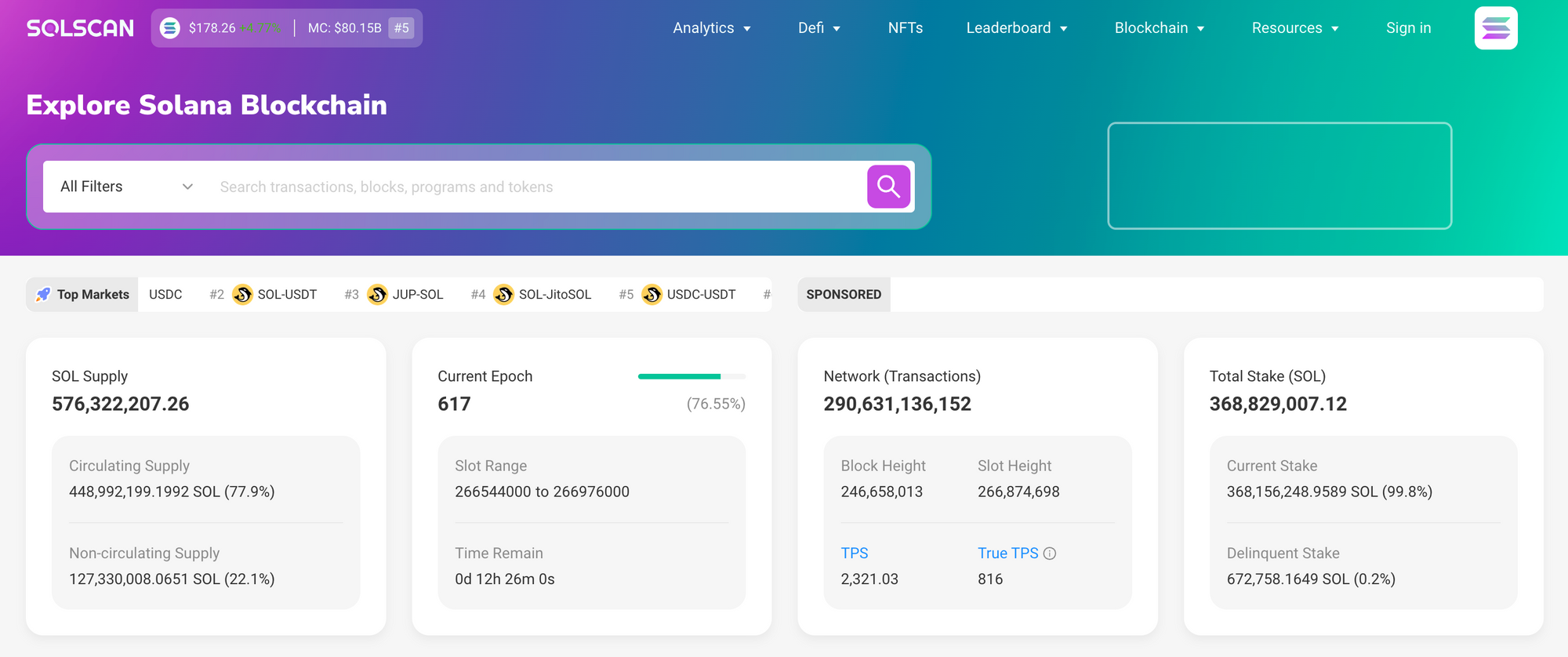
I regularly use solscan for quick token looks, NFT provenance checks, and deeper forensic dives when needed.
That link is the only external reference I recommend in this piece, and it’s because I appreciate the balance of simplicity and advanced tooling they offer.
Seriously, if you haven’t toyed with their token tracker and NFT pages, give them a spin on a low-risk token and you’ll see what I mean.
Really?
Yes — but nothing is perfect.
There are times when on-chain data needs cross-checking with off-chain sources like collection marketplaces for accurate floor prices, and mismatches can be frustrating.
On one hand explorers are improving metadata syncing with marketplaces, though on the other hand rapid delistings and API rate limits create transient inconsistencies that you must mentally account for.
So yeah, treat any single source as informative but not infallible, and corroborate when it’s high stakes.
Whoa!
Start with the token or collection page and scan recent transfers and sales to get a feel for velocity.
Next, check top holders and look for concentration—if a few wallets control most supply that raises risk for a sudden dump or manipulation.
Then, dig into the recent buyer and seller addresses; a pattern of the same wallets flipping assets could mean wash trading or market-making activity that changes how you value the asset.
Hmm…
Finally, cross-verify metadata and floor prices with marketplace APIs before making large trades.
Also, export the data when you’re doing bigger portfolio moves so you can run offline analysis or share findings with partners without clicking around forever.
My instinct said this routine would be overkill, but actually it becomes second nature, and it materially reduces surprises.
I’m not 100% sure everyone needs this depth every time, though for serious collectors and traders it’s very helpful.
A token tracker shows mint information, supply changes, transfer history, holder distribution, and often links to the mint authority and metadata, whereas a simple balance view just shows your holdings without broader context.
Yes, by analyzing repetitive transfer patterns between the same wallets, unusually high turnover, and concentration of supply among a few addresses you can infer potential manipulative behavior, though off-chain corroboration often helps confirm suspicions.
For researchers, collectors managing multiple wallets, and traders, API access and CSV exports automate repetitive checks and scale your analysis, making them well worth the small setup effort.