Physical Address
304 North Cardinal St.
Dorchester Center, MA 02124
Physical Address
304 North Cardinal St.
Dorchester Center, MA 02124
Whoa!
So I was poking through Solana transactions the other day.
At first I was just looking up a wallet for a friend.
Initially I thought the usual explorers would do fine, but then something felt off about how NFT royalties and transfers were being displayed, and that led me down a rabbit hole.
This post lays out what I found—what works, what’s rough, and what you can actually use today.
Really?
Solana tooling moves fast, and you can miss somethin’ if you blink.
My instinct said that all explorers felt similar, and that was a lazy first impression.
On one hand the basics are the same—tx hashes, program logs, token balances—though actually the way each explorer indexes and surfaces metadata changes what you can discover.
I want to give concrete examples, not vague bragging.
Here’s the thing.
Top NFT trackers show collections, floor prices, holders, and transfer history.
But the depth varies—some only surface metadata while others parse compressed NFTs and off-chain JSON more aggressively.
That parsing choice affects provenance checks, marketplace attribution, and even how wash trades look in the UI.
I ran a few queries against recent collections to see who was buying, and that revealed some ugly patterns.
Hmm…
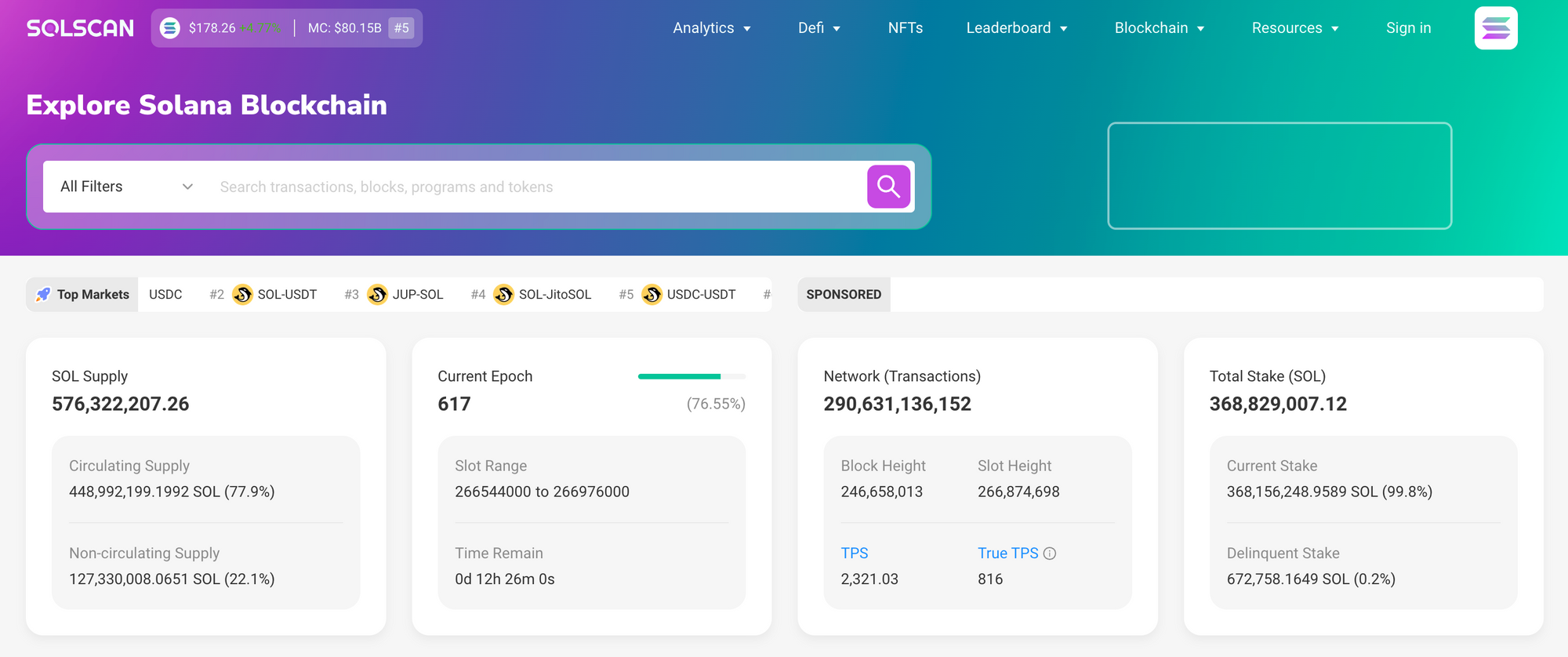
I lean toward explorers that make it simple to pivot between a token, its creators, and the associated transactions—solscan nails that workflow in many cases.
Initially I thought the difference was just UI polish, but digging into indexing latency, token metadata support, and how compressed collections are decoded showed bigger divergences.
If you need quick provenance checks or want to trace royalties back to a mint, the way an explorer parses program logs and metadata is very very important.
I’m biased, but for hands-on analysis solscan gives the right mix of raw detail and readable summaries.
Okay, so check this out—
One concrete example: compressed NFTs.
Most explorers treat them as opaque blobs for awhile, and that makes holder analytics misleading.
Solscan (in my experience) iterates faster on decoding those compressed formats, which means collection pages reflect true circulating supply sooner than some alternatives.
That speeds up investigations and helps avoid false positives when auditing suspicious activity.
On the flipside, nothing is perfect.
Some historical transfers still show incomplete metadata, and sometimes off-chain JSON fetches fail silently.
Initially I thought that was a rare edge-case, but after testing across several marketplaces I realized it’s a recurring pain point—especially with lazy-hosted metadata.
Actually, wait—let me rephrase that: the metadata issues are common when projects cut corners, not because explorers are lazy.
The explorer can only surface what’s recorded or retrievable; garbage in, garbage out…
Here’s a workflow I use.
Step one: load the collection summary and check mint transactions.
Step two: inspect large transfers and the earliest holders.
Step three: cross-reference marketplace listings and program logs for royalty flags and creator signatures.
That three-step approach helps separate organic market activity from wash trading or bot-driven flips.
Sometimes the UX gets in the way.
Oh, and by the way, toggles that hide program logs are annoying when you need them.
I like explorers with keyboard shortcuts and deep-filter URLs so I can bookmark a complex query—solscan often has these, which saves time during an audit.
If you’re doing repeated investigations you’ll appreciate reproducible queries.
You can save a lot of time and avoid redoing the same digging every single time.
Regionally speaking, I see different expectations.
Silicon Valley devs want JSON endpoints and CLI tools.
Buyers in NYC or the Midwest care about clean visual summaries and quick trust signals.
Solana’s ecosystem needs explorers that serve both camps, and a few platforms try to hit that middle ground—some succeed better than others.
That’s why I evaluate explorers on both API robustness and desktop/mobile UI coherence.
Seriously?
Don’t trust a single data point.
Cross-check transfers, timestamps, and marketplace receipts.
Use program logs to confirm which instructions executed during a transaction; that often tells you whether a transfer was a sale, a mint, or a programmatic airdrop.
If you rely only on floor price graphs you can miss wallet-level manipulation, and that’s risky if you’re doing due diligence.
I’m not 100% sure about everything yet.
There are still edge cases where on-chain state and off-chain metadata disagree.
When that happens, mark the asset as “under review” and dig deeper—maybe reach out to the project’s team or check marketplace provenance.
For professional audits, export the raw transaction list and store it alongside screenshots; this helps if you need to prove a timeline later.
Trust, but verify—old Wall Street habits apply here too.
Yes, to an extent.
You can inspect mint and sale transactions, plus program logs that indicate fee routing.
However, off-chain marketplace settlements and private agreements won’t always be visible on-chain, so treat on-chain evidence as one source among several.
APIs matter most.
If you want programmatic access, pick an explorer with documented endpoints and stable rate limits.
I’m partial to tools that let you pull CSVs or JSON and then run your own statistical checks.
Look for tight clusters of wallets swapping the same tokens at similar times, repeated transfers between a small set of addresses, and abnormal bid patterns on marketplaces.
Cross-referencing timestamps, holder histories, and orderbook activity helps reveal these patterns.